CRM development services

Custom CRM development built around how you sell

Our CRM development services give your sales and operations team a CRM with the pipelines, roles, reporting and integrations you actually use, instead of a process bent around someone else's data model. A written discovery scope comes first, and one named contact runs delivery. Send us a short brief to start.

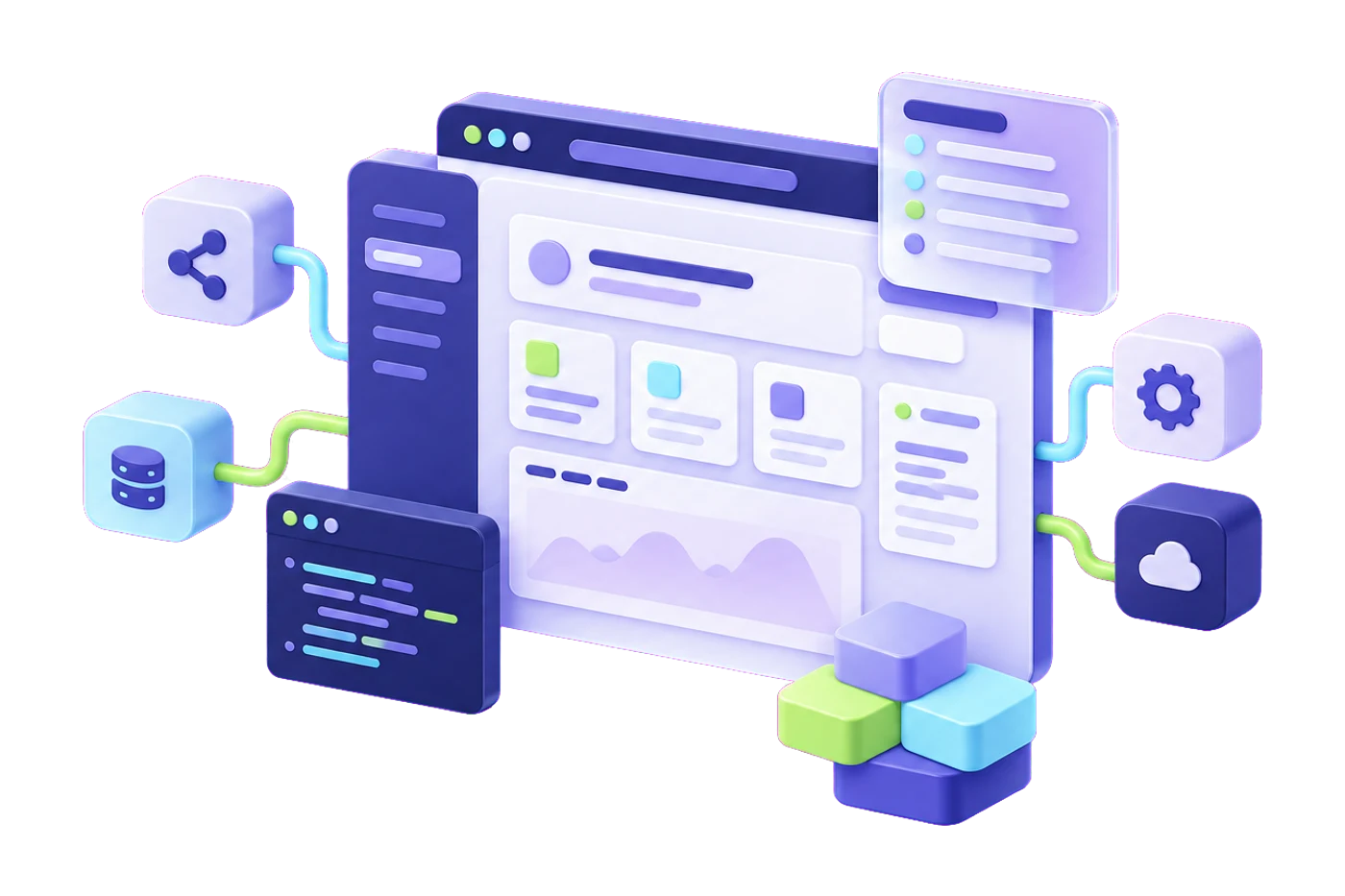
Illustration of a connected product team
Delivery
One cross-functional team covers front-end, back-end, QA and DevOps, so your CRM build runs from a written discovery scope through to deployment.
Contact
A named delivery lead owns day-to-day progress, and a technical architect is accountable for system design and code quality.
Ownership
IP assignment is written into the contract before your CRM build begins.
Reviews
You review the working CRM at the end of every sprint, with the communication window agreed before work starts.
What you get

A CRM built around how your team sells

Written discovery scope

We start by mapping your pipeline stages, user roles, reporting needs and the systems your CRM must connect to. You receive a written discovery scope before design begins, so you know what the first release includes and where the open questions sit. That removes the guesswork that usually causes rework later.

One team, one point of contact

Front-end, back-end, QA and DevOps engineers work as a single cross-functional team on your CRM. A named delivery lead handles day-to-day progress and communication, and a technical architect is accountable for system design and code quality. You never have to coordinate separate vendors.

Sprint reviews and code you own

You review working software at the end of every sprint, so priorities can change before they become expensive. IP assignment is confirmed in the contract before the build begins, and release ends with documentation and deployment access handed to you. If a Salesforce-based platform would suit you better than a custom build, we will say so after scoping.

Who it suits

A CRM built around how you sell

  • Teams whose sales pipeline, roles and reporting no longer fit an off-the-shelf CRM
  • Operations leaders replacing spreadsheets with one shared customer record
  • Companies weighing a Salesforce-style build against custom CRM software development
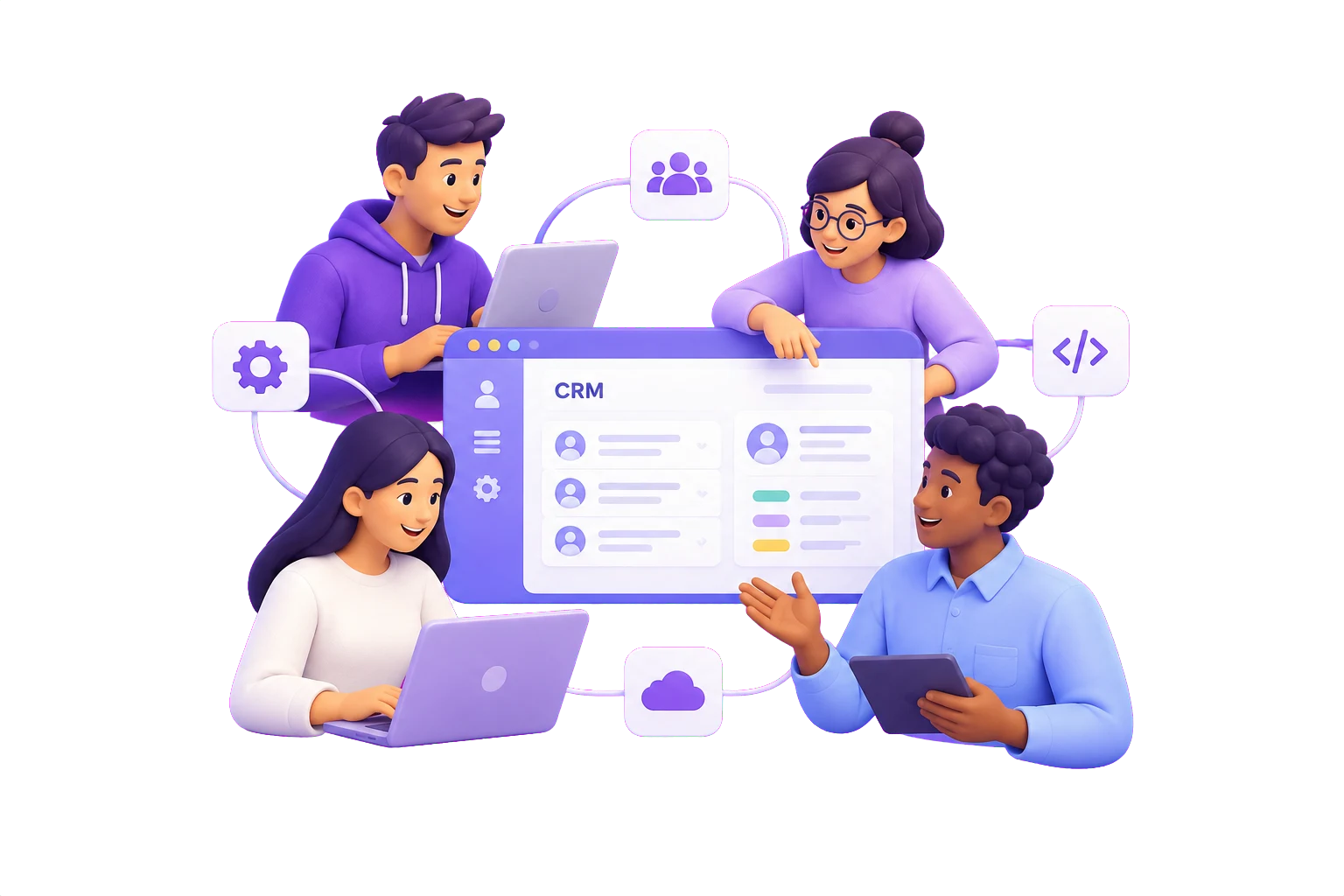
Illustration of a team planning a CRM
How a CRM project runs

How your CRM build runs, stage by stage

  1. Discover

    We map how your team sells and serves customers: pipeline stages, user roles, reporting needs and the systems the CRM must connect to. The result is a written discovery scope that sets out what the first release includes and leaves out.

    You receive
    • Written discovery scope
    • Open questions list
    • Initial estimate

    You agree the written first-release scope

  2. Design

    We design the pipeline views, record layouts and permission rules, and our technical architect sets out the system design and technology choices. You review how a rep, a manager and an administrator would use the CRM before any code is written.

    You receive
    • Pipeline and user flows
    • Interface designs
    • Data model notes

    You approve the designs before the build starts

  3. Build

    One cross-functional team builds the agreed CRM workflows, integrations and data import in sprints, with QA running alongside development. Your named delivery lead keeps you informed, and you see working software at the end of every sprint.

    You receive
    • Staging builds to test
    • Sprint progress reviews
    • CRM test results

    You review the CRM at the end of each sprint

  4. Validate

    We test the CRM against the acceptance criteria agreed in discovery, including roles, integrations and migrated data. You and your team try real sales and service scenarios and tell us what needs fixing before go-live.

    You receive
    • Acceptance checklist
    • QA report
    • Open issue log

    You accept the CRM against the agreed criteria

  5. Release

    Netofficials plans the production rollout of your CRM, including data migration cutover and user access, and prepares the handover. You confirm the release plan with your delivery lead before anything goes live.

    You receive
    • Production CRM release
    • Handover documentation
    • Deployment access

    You sign off the release and handover

Ready to scope your CRM build?

Send a short brief on your pipeline, roles and the systems your CRM must connect to, and we reply with questions, a proposed first-release scope and the team we would assign.

Start my brief
Decisions before estimates

What drives CRM cost and timing

Pipelines, roles and permissions

Your sales stages, user roles, approval rules and admin needs set the size of the first release. A pipeline for one team with two roles is a smaller build than several teams with different views and permissions. We map these in the written discovery scope, so you see what the estimate covers before the build starts.

Integrations and data migration

Email, billing, marketing tools, ERP and the spreadsheets or legacy CRM holding your records all add scope. Each connection and each data set to migrate is listed in the discovery scope, so cleanup effort and integration work are visible early. They are not discovered halfway through the build.

Release, reporting and support

Reporting needs, testing depth, deployment and the team that will run the CRM afterwards all affect timeline. We settle these with you before delivery begins. The release ends with documentation and deployment access handed over. If a Salesforce-style platform would suit you better than a custom build, we will say so after scoping.

Engagement models

Three ways to build your CRM with us

Project delivery

Fixed-price delivery of a CRM with a defined first release, suited to teams that know their pipeline, roles and integrations and want a set scope.

  • A written discovery scope fixes pipeline stages, user roles and integrations before the build starts
  • A sprint review at the end of every sprint lets you see CRM workflows working and steer the next one
  • A change request covers any new module or report that falls outside the agreed scope

Dedicated team

A dedicated India-based team that keeps extending your CRM release after release, suited to sales operations that change constantly.

  • Engineers with CRM, API and database skills placed to match your stack
  • Sprint planning with your product owner, who orders the CRM backlog from pipeline stages to reporting
  • A named delivery lead for day-to-day progress and a technical architect accountable for CRM design and code quality

Staff augmentation

Engineers added to your in-house team to build or extend your CRM, suited to companies that already run their own roadmap.

  • Back-end, front-end or QA engineers added where your CRM roadmap needs integration or data migration skills
  • Engineers who work in your repositories, ticketing and code review process, with no parallel system to learn
  • Meeting schedule, update cadence and overlap hours with your team agreed before the first working day
Technology for your CRM build

A CRM stack chosen around your requirements

Your CRM stack is confirmed in the written discovery scope, so you know the technology before the build starts. We choose it around your pipelines and integrations, the systems you already run and the team who will maintain the CRM after release. A technical architect is accountable for that choice and for code quality standards, which means you avoid rework from a stack picked for convenience. If a configured platform such as Salesforce would suit you better than a custom build, we will say so after scoping.

ReactNode.jsPythonPostgreSQL
Before you enquire

Answers before you send a brief

What decides the cost and timeline of a custom CRM build?

Cost and timeline follow five things: the number of sales and service workflows, user roles and permissions, integrations with systems such as email, billing or ERP, data migration from your current CRM or spreadsheets, and release and support needs. We turn these into a written discovery scope with an initial estimate, and agree the assumptions and review milestones before delivery begins. Send a short brief and we will tell you which of the five matter most for your build.

Who owns the CRM code, and how will we communicate during the build?

You own the CRM. Netofficials confirms IP assignment in the contract before the build begins, and hands over documentation and deployment access at release. A named delivery lead owns day-to-day progress and your communication, and a technical architect is accountable for system design and code quality. We agree the communication window, meeting schedule and update cadence with you before work starts, and you review the work at the end of every sprint.

Should we build a custom CRM or use a Salesforce-based platform?

A custom CRM suits teams whose sales process, roles or integrations do not fit a standard data model, while a Salesforce-style platform can suit teams whose process is close to its defaults. We cover your pipeline, reporting and integration needs in the written discovery scope. If another approach would serve you better, we will recommend it after scoping. Tell us what your team does today in a short brief and we will give you an honest view.

Send a brief for your custom CRM

Tell us how your team sells, serves customers and reports today, and where your current CRM or spreadsheets get in the way. We reply with questions and a written discovery scope for your first release, so you can see what a CRM built around your process involves before any build starts. If a Salesforce-based platform or another approach would suit you better, we will say so after scoping.

Talk about your project