
Hire backend developers

Hire a backend developer who joins your team

When you hire a backend developer from Netofficials, you add API, database and integration capacity to your product without a long recruitment cycle. The senior engineer who scopes the work leads the build, and you speak directly to that technical lead. Send a brief covering your product, stack and working hours.

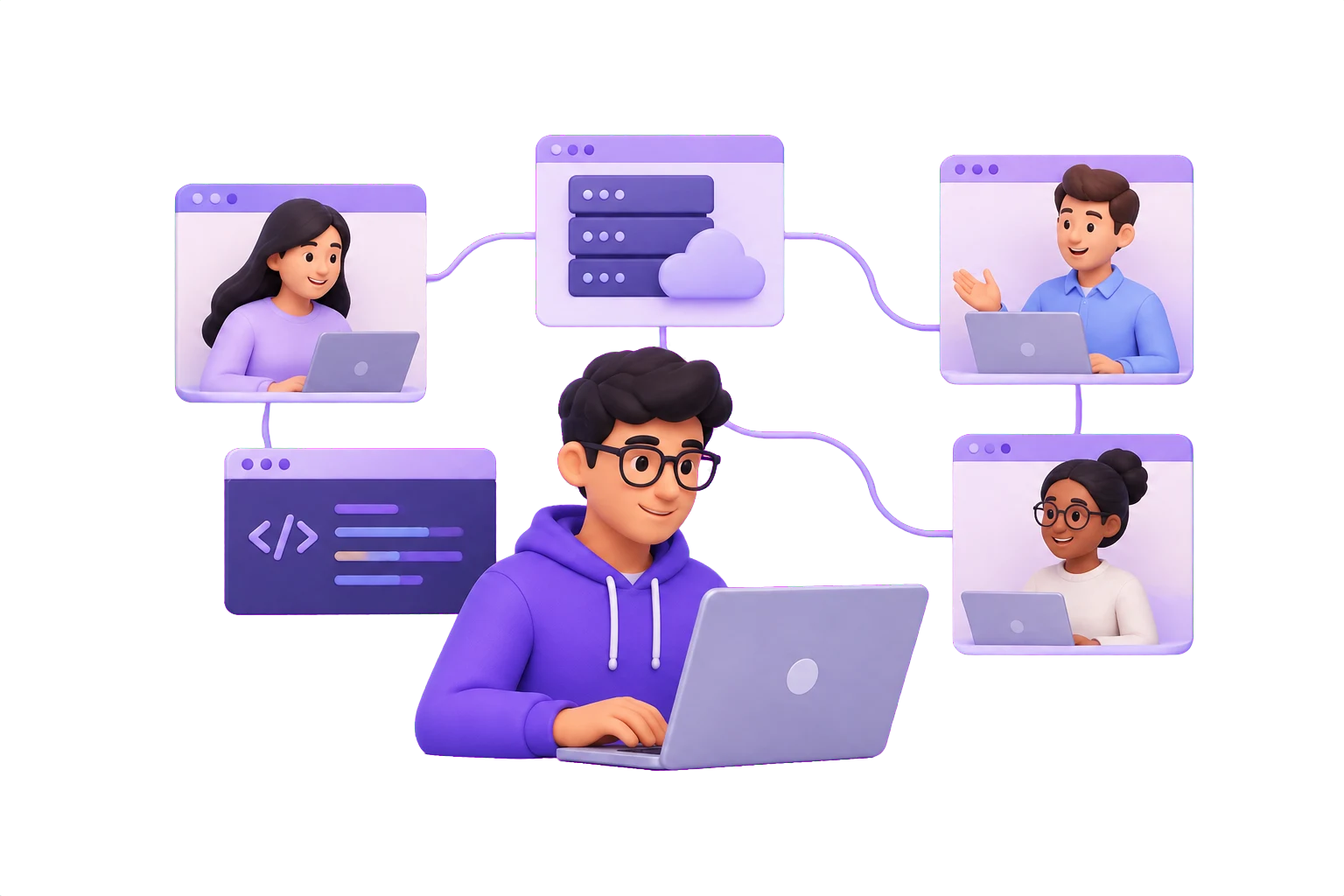
Illustration of a connected product team
Delivery
One cross-functional team covers back-end, front-end, QA and DevOps, so your backend work is not split across vendors.
Contact
You speak directly to the technical lead who scoped the work, with no account manager in between.
Ownership
Your contract confirms IP assignment before the build begins, so the backend code is yours.
Cadence
We agree the communication window, meeting schedule and update cadence with you before work starts.
What you get

What a backend developer takes off your plate

APIs and application logic

Your backend developer designs and builds the REST or GraphQL APIs, business rules and authentication your product depends on. You get endpoints your front-end and mobile teams can build against, with fewer surprises between services and less rework when requirements shift.

Data and integrations

Your backend developer models your database, writes migrations and queries, and connects payment, CRM, ERP and other third-party systems. The aim is data you can trust and integrations that fail in ways you can see and recover from, rather than silently.

Reliability and scale

Your backend developer works on performance, background jobs, logging and deployment alongside the wider Netofficials team, which covers QA and DevOps. If your problem is closer to infrastructure or front-end work, we will say so after scoping and suggest the role that fits.

How hiring works

From brief to backend engineer, with your sign-off at each step

  1. Brief

    You send the product, current stack, backend problems and working hours. The senior engineer who would lead the build reads it and proposes the backend skills that fit your APIs, data and integrations.

    You receive
    • Backend role brief
    • Stack and skills checklist
    • Proposed engineer match

    You confirm the role and the backend skills needed

  2. Fit review

    You speak directly with the technical lead about the engineer's backend experience, how code review will run and where the role sits in your team. If another model or role suits you better, Netofficials will recommend it after scoping.

    You receive
    • Technical review plan
    • Role expectations summary
    • Working-hours agreement

    You approve the proposed engineer and expectations

  3. Onboarding

    We agree the communication window, meeting schedule and update cadence, then plan repository, environment and deployment access. IP assignment is confirmed in the contract before work begins.

    You receive
    • Environment access plan
    • Code and IP ownership map
    • Update cadence

    You sign off the onboarding plan

  4. Start

    The engineer begins on a shared backlog inside your tools and process, with sprint reviews and one named lead as your point of contact. Work moves from API, database and integration tasks to release, with documentation and deployment access handed over.

    You receive
    • Shared sprint backlog
    • Sprint review sessions
    • Direct technical lead access

    You review the first sprint's progress with your technical lead.

Ready to add a backend developer?

Send us your product, stack and working hours, and the technical lead replies with questions and a proposed fit, so you can judge the match before committing.

Start my brief
Check the fit

What to check before you hire a backend developer

  • Hands-on experience with the APIs, databases and integrations your product depends on
  • A communication window and update cadence agreed with you before work begins
  • Understanding of your scale, security and uptime constraints, not only your stack
  • Defined ownership of services and releases next to your existing engineers
Engagement models

Pick the backend engagement model that fits

Dedicated team

A long-term, full-time remote squad built around your backend roadmap, suited to products that need steady API, database and integration work over many sprints.

  • Backend engineers matched to your stack, data model and integration load
  • Agile sprints using Scrum, run with your product owner
  • Source code and IP owned by you from the first sprint

Staff augmentation

One or more backend engineers who join your existing team and take tickets from your board, suited to teams that already have the process and need extra API or data capacity.

  • Backend engineers added to your team for specific skills such as API design or database work
  • Backend engineers who work in your repositories, ticketing and CI pipeline, so API and database work follows your review rules
  • A communication window, meeting schedule and update cadence set with your team before the first commit

Project delivery

A fixed-price build with a written scope, suited to a well-defined backend piece such as a new API, a service migration or a third-party integration.

  • A written scope for the API, data and integration work, with acceptance criteria and milestones, before the fixed-price build starts
  • A sprint-end review where you check working endpoints and data flows, not just status reports
  • A change request for any backend work outside the agreed scope, so new integrations never change the price silently
Backend hiring FAQ

Hiring a backend developer: your questions answered

How do we choose between a dedicated team, staff augmentation and fixed-price delivery?

Pick the model that matches how much of the work you can direct yourself. Staff augmentation suits you if you have a lead and a process and need backend engineers inside them. A dedicated India-based team suits a long-running roadmap that needs a full-time squad working in Agile sprints. Fixed-price project delivery suits a defined scope with written acceptance criteria. Tell us your product, stack and goals in a brief, and if another model or role fits better, we will recommend it after scoping.

How is the cost of a backend developer set?

Cost follows the scope, not a fixed rate card. The main drivers are the work itself (APIs, database design, integrations or scaling), the age and complexity of your existing systems, how many engineers you need and for how long, and the engagement model. We review the role and scope with you first, then quote. Send us your stack and roadmap priorities so the quote reflects your real situation.

Who owns the code, and who will I talk to day to day?

You own the source code and intellectual property, and IP assignment is confirmed in the contract before the build begins. You also talk directly to the technical lead, the senior engineer who scoped the work, with no account manager in between. Before work starts, we agree the communication window, meeting schedule and update cadence with you. At release, we hand over documentation and deployment access.

Send your backend brief and get a proposed fit

Tell us your product, your stack and the working hours you need covered. We review whether APIs, data, integrations or scaling work are the real bottleneck, then propose a backend developer and the engagement model that suits the work. If another model or a different role would serve you better, we will say so after scoping. You talk directly to the technical lead, with no account manager in between.

Talk about your project